






 Zuhause
 Produkte
29+ years in pharmaceutical machinery, covering capsule filling, tablet pressing, blister packaging, tablet and capsule counting, cartoning, GMP production, and overseas machine service.

Sie fragen sich, ob Fischöl wirklich so gesund ist – und wie es eigentlich zu diesen glatten Weichgelkapseln hergestellt wird, die man im Regal sieht?
Fischöl, gewonnen aus fettreichen Fischen wie Lachs, Makrele, Sardinen und Sardellen, ist reich an Omega-3-Fettsäuren (EPA und DHA) und Vitaminen, die die Gesundheit von Herz, Gehirn, Gelenken und Augen unterstützen. Der globale Markt für Fischölpräparate hatte 2025 ein Volumen von über 10 Milliarden US-Dollar und wird sich voraussichtlich bis 2035 mehr als verdoppeln, da die Nachfrage nach Omega-3-Präparaten stetig wächst.
Obwohl Millionen von Menschen täglich Fischölkapseln einnehmen, sind viele über den tatsächlichen Nutzen, die richtige Dosierung oder mögliche Nebenwirkungen unsicher. Gleichzeitig ist die Herstellung dieser Weichkapseln nicht so einfach, wie es scheint. Fischöl reagiert empfindlich auf Sauerstoff, Temperaturschwankungen und die Handhabung, was die Herstellung eines gleichbleibenden und zuverlässigen Produkts zu einer echten Herausforderung macht.
Dieser Artikel befasst sich eingehend mit den Inhalten, Verpackungsformen, Vorteilen, empfohlener Dosierung, dem Herstellungsprozess und Reichhaltige Verpackung Die Produktionslösungen von [Name des Unternehmens] stehen hinter den stabilen und wirksamen Fischöl-Weichkapseln.
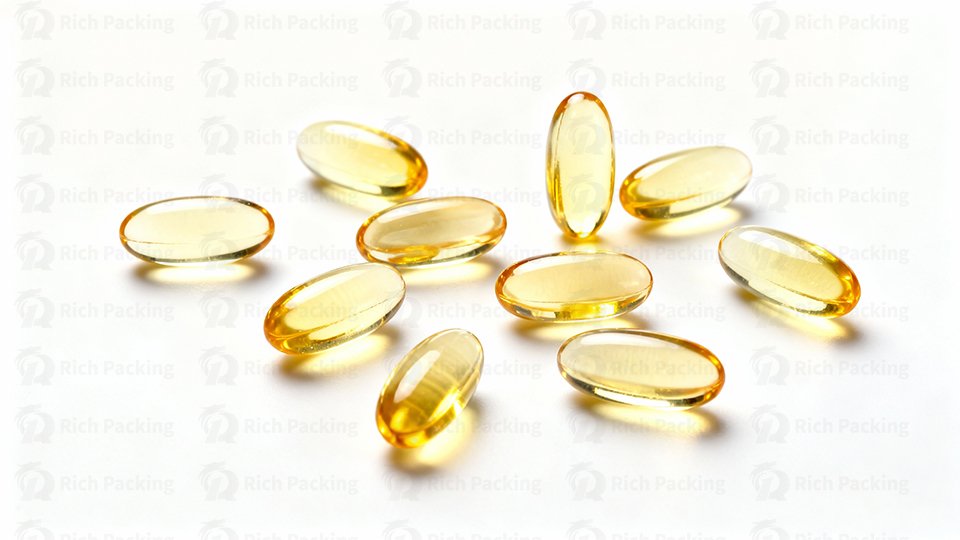
Wichtigste Erkenntnisse
● [endif] Überblick über die Inhaltsstoffe und Verpackungsformen von Fischöl
● Einblicke in Nutzen und mögliche Nebenwirkungen.
● Empfohlene Dosierungsanleitung nach Anwendergruppe
● Rohstoffe, Ausrüstung und Produktionsprozess von Fischöl-Weichkapseln.
● Rich Packings Lösungen für die Herstellung von Weichkapseln
Fischöl wird aus fettreichen Fischen wie Lachs, Makrele, Sardinen und Sardellen gewonnen. Seine wichtigsten Nährstoffe sind Omega-3-Fettsäuren, die unser Körper nicht ausreichend selbst herstellen kann. Man kann sie sich als die „guten Öle“ vorstellen, die Ihr Körper braucht: Sie unterstützen die Herzfunktion, die geistige Leistungsfähigkeit, die Gelenkbeweglichkeit und die Augengesundheit. Laut den US-amerikanischen National Institutes of Health (NIH) gehören zu den wichtigsten Bestandteilen und Vorteilen:
● EPA (Eicosapentaensäure) Unterstützt die Herz-Kreislauf-Gesundheit, hilft bei der Regulierung von Entzündungen und kann den Gelenkkomfort verbessern.
● DHA (Docosahexaensäure) Entscheidend für die Gehirnentwicklung und -funktion, das Gedächtnis und die kognitive Leistungsfähigkeit. Macht etwa 30–40 % der Fettsäuren im Gehirn und über 50 % derjenigen in der Netzhaut aus.
● Vitamine und Spurenelemente Einige Fischölpräparate enthalten die Vitamine A, D und E, die die Immunfunktion, das Sehvermögen und den antioxidativen Schutz unterstützen.
Diese Inhaltsstoffe machen Fischöle in allen Altersgruppen zu einem weit verbreiteten Mittel zur Unterstützung der Herzgesundheit, der kognitiven Fähigkeiten, des Gelenkkomforts und der Augengesundheit.
Trotz gleicher Zusammensetzung ist Fischöl in verschiedenen Darreichungsformen erhältlich, darunter flüssiges Öl, Emulsionen, Weichkapseln und Kaugummis. Jede Form hat ihre Vor- und Nachteile:
● Flüssiges Fischöl: Es lässt sich leicht dosieren und anpassen, ist aber sehr empfindlich gegenüber Luft und Licht. Es kann einen starken Fischgeschmack haben und muss in der Regel gekühlt werden, daher ist es für den täglichen Gebrauch nicht optimal geeignet.
● Emulsionen: Sie wurden entwickelt, um Geschmack und Aufnahme zu verbessern. Sie sind magenschonender, aber oft teurer und nicht so lange haltbar wie Kapseln.
● Gummibärchen: Beliebt bei Kindern und Erwachsenen, die Kapseln nicht mögen, aber eine genaue Dosierung ist schwierig, und der Omega-3-Gehalt pro Gummibärchen ist in der Regel geringer.
● Weichkapseln: Sie bieten die beste Balance aus Komfort, Stabilität und genauer Dosierung und sind daher die erste Wahl für Verbraucher und Hersteller.
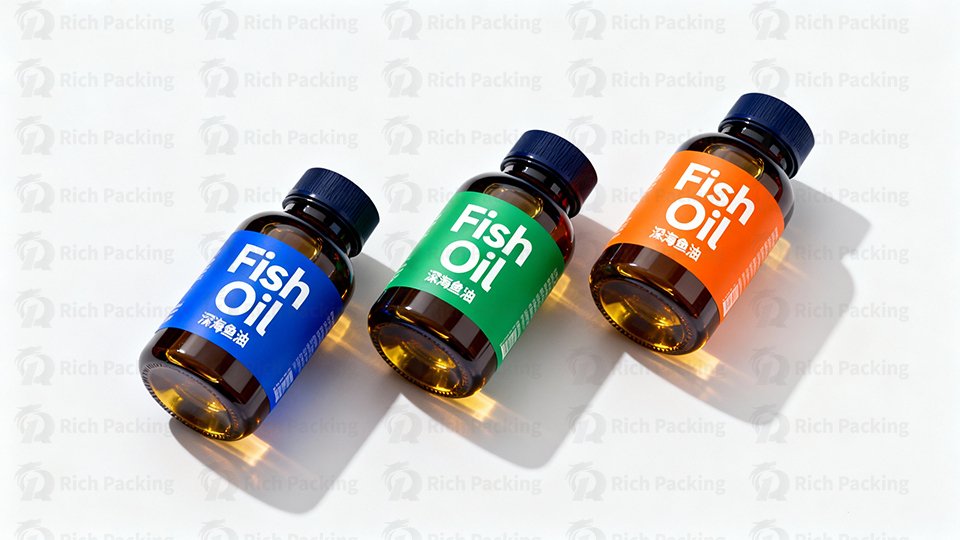
Obwohl man flüssiges Fischöl direkt einnehmen kann, sind Omega-3-Weichkapseln mit Abstand die beliebteste Option. Die Gelatinehülle schützt das Öl vor Sauerstoff, Licht und Feuchtigkeit und beugt so dem Verderben und dem typischen Fischgeruch vor. Ob Fischöl-Weichkapseln für Kinder oder Erwachsene – jede Kapsel enthält eine gleichbleibende Dosis, sodass Anwender zuverlässig die richtige Menge an EPA und DHA erhalten.
Für den täglichen Gebrauch sind Weichkapseln praktisch und leicht zu schlucken. Aus herstellungstechnischer Sicht ermöglichen sie eine gleichbleibende Qualität, präzise Dosierung und bessere Haltbarkeit, während sie gleichzeitig Geschmack und Geruch maskieren. Dadurch lässt sich Fischöl problemlos in die tägliche Routine integrieren.
◼ [endif] Herz-Kreislauf-Gesundheit
Von den vielfältigen Vorteilen von Fischöl ist die Unterstützung der Herzgesundheit der bekannteste. Studien, die von der American Heart Association zitiert werden, zeigen, dass Omega-3-Fettsäuren den Triglyceridspiegel um 15–30 % senken können, abhängig von der eingenommenen Menge und den Ausgangswerten.
Dr. Dariush Mozaffarian, ehemaliger Dekan der Friedman School of Nutrition Science and Policy an der Tufts University, hat in öffentlichen Interviews darauf hingewiesen, dass Omega-3-Weichkapseln „nicht wie ein Medikament wirken, das ein einzelnes Problem behebt, sondern wie ein Nährstoff, der mehrere Stoffwechselwege unterstützt, darunter Entzündungsprozesse und den Fettstoffwechsel.“
Mit anderen Worten: Fischöl wirkt unauffällig im Hintergrund und unterstützt den Körper auf vielfältige Weise, anstatt sofortige, dramatische Effekte zu erzielen.
◼ Gehirn- und kognitive Unterstützung
DHA ist ein wichtiger Baustein für Gehirnzellen. Während der Schwangerschaft und in der frühen Kindheit trägt eine ausreichende DHA-Zufuhr zu einer gesunden Entwicklung von Gehirn und Augen des Babys bei. Studien von Verywell Health und den National Institutes of Health (NIH) zeigen, dass Mütter, die Fischölkapseln mit DHA einnehmen, die Sehkraft und die kognitiven Fähigkeiten ihrer Kinder fördern können.
Für Erwachsene und ältere Menschen können Omega-3-Fettsäuren wie DHA dazu beitragen, die geistige Leistungsfähigkeit langfristig zu erhalten, auch wenn sie bestehende Probleme nicht auf magische Weise beheben können.
◼ Gelenk- und Augenkomfort
EPA wirkt wie ein kleiner Entzündungshemmer und trägt dazu bei, dass die Stoffwechselprozesse im Körper reibungslos ablaufen. Deshalb wird Fischöl oft mit Gelenkproblemen und der Erhaltung der Gelenkbeweglichkeit in Verbindung gebracht. Für die Augen wirken Omega-3-Fettsäuren wie natürliche Augentropfen und unterstützen die Stabilität des Tränenfilms. Dies ist ideal für alle, deren Augen durch langes Starren auf Bildschirme oder das Tragen von Kontaktlinsen trocken sind.
Fischöl ist im Allgemeinen sicher, aber „natürlich“ bedeutet nicht risikofrei.
Zu den häufigen Nebenwirkungen von Fischöl gehören leichte Magen-Darm-Beschwerden, Blähungen, Übelkeit oder ein fischiger Nachgeschmack. Diese Beschwerden hängen oft mit der Dosierung, Oxidation oder der Qualität der Kapseln zusammen.
Wichtiger noch: Omega-3-Fettsäuren weisen eine leichte gerinnungshemmende Wirkung auf. In höheren Dosen kann Fischöl die Blutungsneigung leicht erhöhen. US News Health rät daher zur Vorsicht für Personen, die:
● Nehmen Sie gerinnungshemmende oder Thrombozytenaggregationshemmer ein.
● Bei mir wurden Blutungsstörungen diagnostiziert.
● Bereiten sich auf die Operation vor
Um eine Überdosierung von Fischöl zu vermeiden, empfehlen die meisten maßgeblichen Leitlinien, die kombinierte Aufnahme von EPA und DHA unter 3 Gramm pro Tag zu halten, sofern dies nicht unter ärztlicher Aufsicht erfolgt. Bei dieser Dosierung ist die Genauigkeit nicht nur eine Frage der Ernährung, sondern auch der Sicherheit.
Die Dosierung von Fischöl variiert stark in Abhängigkeit von Alter, Gesundheitszustand und Ernährungszielen. Diese Variabilität wirkt sich direkt auf das Kapseldesign, das Füllvolumen und die Produktionsgenauigkeit aus. Die folgende Tabelle bietet einen Überblick über die Dosierungsrichtlinien und hebt verschiedene Anwendergruppen sowie wichtige Aspekte hervor.
Tabelle 3.1 Typische Dosierungsrichtlinien für Fischöl
|
Benutzergruppe |
Typischer täglicher EPA+DHA-Bereich |
Wichtiger Aspekt |
|
Gesunde Erwachsene |
250–500 mg |
Wartung und Prävention |
|
Schwangere/stillende Frauen |
200–300 mg DHA |
Fötale und kindliche Entwicklung |
|
Kinder |
alters- und gewichtsbereinigt |
Übermäßigen Verzehr vermeiden |
|
Nutzer mit hohem Herzrisiko |
≥1 g (unter Aufsicht) |
Medizinische Überwachung erforderlich |
Für Hersteller ist diese Tabelle keine Marketingmaßnahme, sondern technische Realität. Jede Dosierungsstufe erfordert unterschiedliche Kapselgrößen, Pumpenkalibrierungen und Qualitätskontrollen. Selbst geringfügige Abweichungen können zu falsch etikettierten Produkten oder zur Nichteinhaltung gesetzlicher Vorschriften führen.
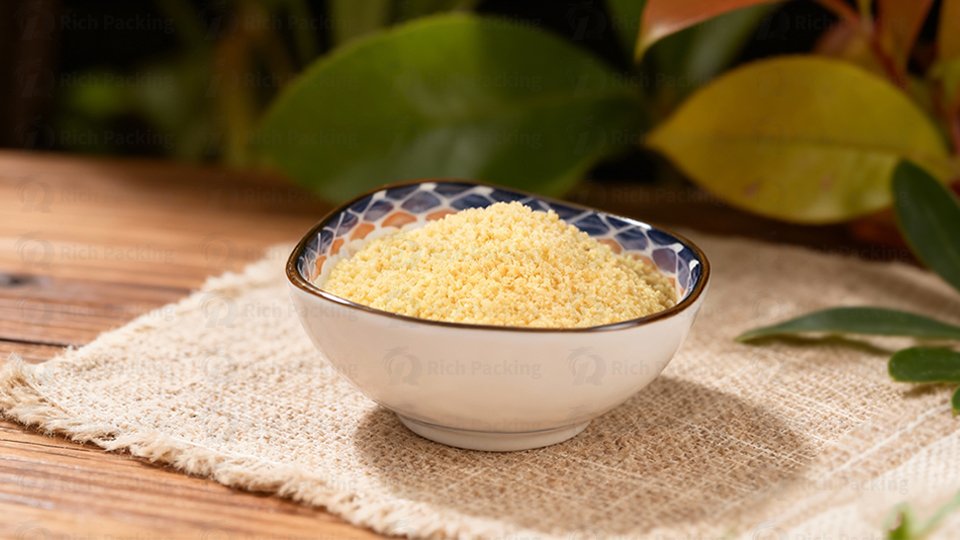
◼ Fischöl
Hochwertiges Fischöl wird vor der Abfüllung in Weichkapseln raffiniert und desodoriert, damit es frisch bleibt und besser schmeckt. Die Hersteller überprüfen zudem verschiedene Indikatoren, um sicherzustellen, dass das Öl stabil und wirksam ist, wenn es Sie erreicht.
◼ Gelatine-Hüllenmaterialien
Weichkapselhüllen bestehen üblicherweise aus Gelatine, Glycerin und gereinigtem Wasser. Glycerin dient als Weichmacher und hält die Hülle flexibel. Ist zu wenig Glycerin enthalten, kann die Kapsel leicht brechen. Ist zu viel enthalten, wird sie klebrig und lässt sich schwer handhaben.
◼ Optionale Zusatzstoffe
Manche Weichkapseln enthalten zusätzliche Inhaltsstoffe wie Vitamin E, Vitamin D oder Aromastoffe. Diese tragen dazu bei, die Oxidation zu verlangsamen und den fischigen Geschmack zu reduzieren, wodurch die Kapseln leichter zu schlucken und angenehmer einzunehmen sind.
◼ Gelatine-Schmelz- und Lagertank
Gelatine wird geschmolzen, vermischt und entgast, um eine gleichmäßige Viskosität zu erreichen. Eingeschlossene Luft mag unbedeutend erscheinen, führt aber häufig zu schwachen Nähten oder Bandfehlern.
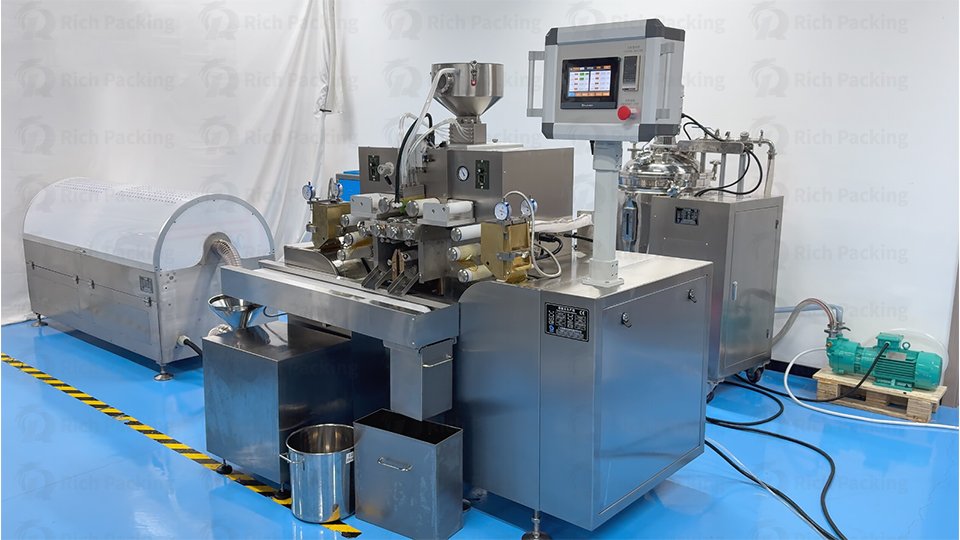
◼ Weichgelatinekapselmaschine (Hauptmaschine)
Dies ist das Herzstück des gesamten Prozesses. Die Maschine formt Gelatinebänder, injiziert Fischöl, verschließt und formt die Kapseln und trennt sie schließlich in einem kontinuierlichen Arbeitsgang vom Gelatineband. Die Temperatur muss dabei stabil bleiben (typischerweise 35–45 °C), um ein einwandfreies Verschließen der Fischölkapseln ohne Auslaufen zu gewährleisten.
◼ Drehtrommel
Frisch hergestellte Weichkapseln enthalten viel Feuchtigkeit. Die rotierende Trockentrommel entfernt diese effizient und trägt so dazu bei, dass die Fischölkapseln nach und nach ihre endgültige Form und mechanische Festigkeit erhalten.
◼ Hilfssysteme
Wasserzirkulations-Vakuumpumpen, Kühler, Förderbänder und ein automatisiertes SPS-Steuerungssystem stabilisieren Temperatur, Druck und Durchfluss. Diese Systeme entscheiden im Hintergrund darüber, ob die Produktion reibungslos läuft oder vom Bedienpersonal abhängig wird.
Grundkenntnisse der Geräte ermöglichen ein leichteres Verständnis des Herstellungsprozesses von nährstoffreichem Fischölgel, den der Autor Schritt für Schritt aufschlüsseln wird.
a. Gelatinezufuhr zur Hauptmaschine
Gelatine wird geschmolzen und im Vorratsbehälter warmgehalten, bevor sie durch ein beheiztes, druckversiegeltes Röhrchen in die Hauptmaschine zur Herstellung von Weichgelatinekapseln überführt wird. Die Temperatur wird bei etwa 40–50 °C gehalten, um ein Erstarren während des Transports zu verhindern.
b. Bandbildung und -füllung
● Die Gelatine gelangt in den Ausbreitungsbehälter und erreicht den richtigen Füllstand für die Gelierfähigkeit.
● Die Gießtrommel verteilt und kühlt die Gelatine zu dünnen Bändern ab.
● Eine Schmierwalze glättet die Farbbänder, bevor sie die Matrizenwalzen erreichen.
● Der Injektor füllt die Kapseln mit präzisen Mengen Fischöl (Genauigkeit ±2%) und versiegelt sie durch Hitze.
● Die beiden Bänder werden geformt und zu einzelnen Omega-3-Weichkapseln geschnitten.
c. Trennung der fertigen Weichkapseln von der restlichen Gelatine
Die fertigen Omega-3-Fischöl-Weichkapseln fallen auf ein Förderband, während die übrig gebliebene Gelatine abgeführt wird, wodurch die Produktion sauber und effizient bleibt.
d. Lufttrocknung in der Drehtrommel
Die Weichkapseln gelangen über ein Förderband und ein Gebläse in die Trockentrommel. Während die Fischölkapseln 6–8 Stunden lang rotieren, zirkuliert kontinuierliche Kühlluft, bis sie vollständig getrocknet und stabil sind. Die Trommel dreht sich vorwärts, um die Kapseln auszugeben, oder rückwärts, um den Trocknungsprozess bei Bedarf zu verlängern.
Aufgrund der Komplexität des Herstellungsprozesses ist der Einsatz hochwertiger Weichgelatinekapselmaschinen von entscheidender Bedeutung. Daher ist es für Hersteller unerlässlich, die häufigsten Herausforderungen bei der Produktion hochdosierter Fischöl-Weichgelatinekapseln zu verstehen und zuverlässige, präzise Maschinen auszuwählen, um den Verbrauchern stabile, wirksame und sichere Produkte anbieten zu können.
Viele Hersteller stoßen im Laufe der Zeit auf dieselben Probleme:
◼ [endif] Uneinheitliche Abfüllung und Dosierungsabweichungen
◼ Ungleichmäßige oder streifige Gelatinebänder
◼ Starke Abhängigkeit von manueller Justierung
◼ Schwierigkeiten beim Umgang mit zähflüssigen Ölen wie Fischöl
◼ Aufwendige Reinigungsprozesse, die die GMP-Konformität erschweren
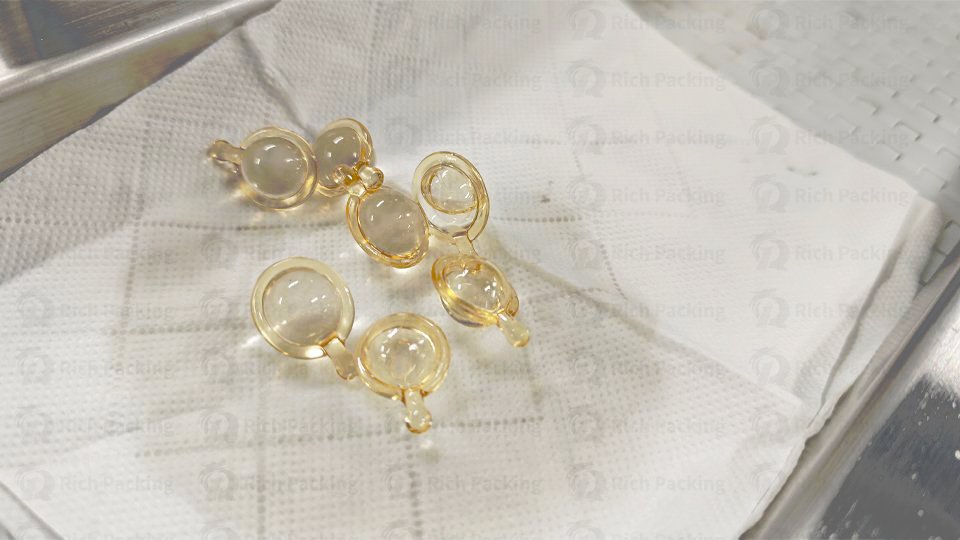
Diese Probleme führen zwar nicht immer zu einem sofortigen Ausfall, reduzieren aber schleichend den Ertrag, erhöhen den Ausschuss und bergen Qualitätsrisiken. Um diesen Problemen zu begegnen, bietet Rich Packing professionelle Lösungen für die Fischölkapselproduktion an – von Abfüllmaschinen für Weichgelatinekapseln bis hin zu kompletten Produktionslinien.
● Vorteile der Weichgelkapsel-Füllmaschine SNJP-150
Die Weichgelkapselmaschine SNJP-150 von Rich Packing wurde für reale Probleme und nicht für ideale Laborbedingungen entwickelt.
Hohe Füllgenauigkeit Gewichtsschwankungen der Kapseln wurden innerhalb von ±1,5 % kontrolliert.
Stabile Bandbildung Wassergekühltes System in Kombination mit Mikroschmierung
Höhere Effizienz Die Anzahl der Formhohlräume wurde von 80 auf 85 erhöht, was zu einer um etwa 11 % höheren Ausbeute führte.
Erweiterte Automatisierung Omron-Steuerungssystem, Siemens-Touchscreen, SPS-gesteuerte Förderbänder und PID-Temperaturregelung sind kombiniert, um die Abhängigkeit vom Bediener zu reduzieren.
mit automatischer Weichgelkapsel-Füllmaschine
Kompatibilität mit viskosen Ölen : Optimierte Pumpenkonstruktion gewährleistet reibungsloses Befüllen mit Fischöl
Leichtere Reinigung: Modulare Rohrleitungen und nichtmetallische Getriebe unterstützen die cGMP-Standards.
● [endif] Wie Rich Packing die Hersteller unterstützt
Rich Packing ist davon überzeugt, dass Kundennutzen die Grundlage für unseren eigenen Erfolg ist und bietet daher mehr als nur Abfüllmaschinen für Weichgelatinekapseln. Hersteller erhalten:
a. Online- und Vor-Ort-Unterstützung bei Installation und Inbetriebnahme
b. Vorbeugende Wartung und einjährige kostenlose Ersatzteilversorgung
c. Entspricht den cGMP- und CE-Standards.
d. Kundenspezifische, flexible Produktionslinienlösungen
Mit Erfahrung in Nordamerika, Europa und Asien unterstützt Rich Packing Hersteller beim Übergang von der Pilotproduktion zu einer langfristigen, stabilen und gesetzeskonformen Skalierbarkeit.
Fischöl-Gelkapseln mögen einfach aussehen, doch jede einzelne Kapsel ist das Ergebnis sorgfältiger Rezeptur und präziser Fertigung. In diesem Artikel behandeln wir die wichtigsten Nährstoffe im Fischöl, seine gesundheitlichen Vorteile, empfohlene Dosierungen für verschiedene Anwendergruppen und mögliche Nebenwirkungen. Wir geben Ihnen außerdem einen Einblick in die Herstellung hochwertiger Fischöl-Weichkapseln – von der Raffination des Fischöls und der Gelatineaufbereitung über die Formung der Kapselbänder, das präzise Abfüllen, Versiegeln und Trocknen bis hin zur Qualitätskontrolle.
Für Verbraucher bedeutet dies, dass sie bewusstere Entscheidungen treffen können. Für Hersteller unterstreicht es die Bedeutung stabiler Prozesse, präziser Dosierung und zuverlässiger Kapselfüllmaschinen für Öl. Hier setzt Rich Packing an – mit fortschrittlichen Produktionslinien für Weichkapseln, technischem Support und Lösungen für Fischölprodukte, denen Verbraucher vertrauen können.
[1] National Institutes of Health (NIH): Informationsblatt zu Omega-3-Fettsäuren
[2] Amerikanische Herzvereinigung: Fisch und Omega-3-Fettsäuren
[3] Healthgrades: Nutzen und Nebenwirkungen von Fischöl
[4] Verywell Health: EPA- und DHA-Gesundheitsfunktionen
[5] US News Gesundheit: Wie viel Fischöl sollte man einnehmen?

29+ years in pharmaceutical machinery, covering capsule filling, tablet pressing, blister packaging, tablet and capsule counting, cartoning, GMP production, and overseas machine service.

Email : manager@richpacking.cn
Building D, No. 226, Beishan Qiaotou Street, Haizhu District, Guangzhou City, Guangdong Province, China


 IPv6-Netzwerk unterstützt